
About Us
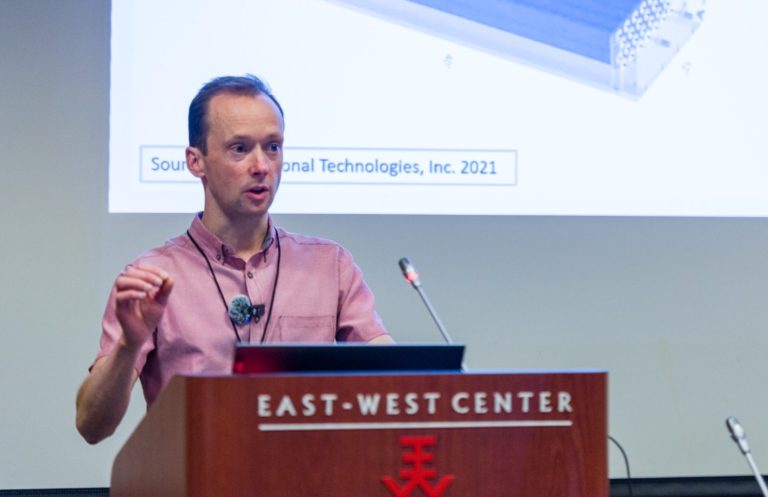
Aspinall Instruments is led by Dr Michael D. Aspinall, a highly experienced engineer and scientist with over 15 years of expertise in radiometric instrumentation and scientific software. He is a former Reader in Nuclear Engineering at Lancaster University and has held senior industry roles delivering mission-critical systems.
Our Mission
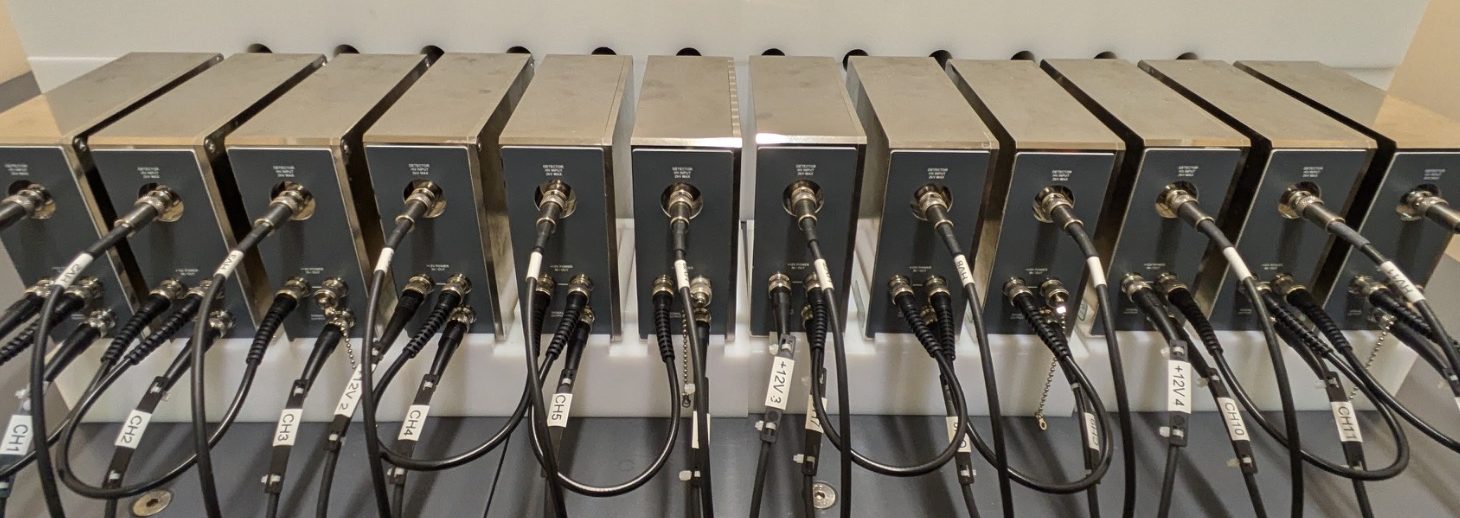
Our mission is to design and deliver precision radiometric instrumentation that advances scientific understanding and strengthens resilience to space weather radiation risks.
Our Vision
Our vision is to be a trusted provider of high-integrity scientific instrumentation supporting critical infrastructure, advancing research, and contributing to national resilience in an increasingly technology-dependent world.
Our Values
We uphold the highest standards of engineering integrity by grounding every decision in rigorous, evidence-based design and validation. Transparency and accountability are central to how we work. We communicate clearly, take full ownership of our commitments, and deliver with honesty and responsibility at every stage.
We pursue excellence through precision and attention to detail in all we do. Our focus on quality ensures that every system we design is robust, reliable, and built for long-term performance, with maintainability considered from the outset.
As an SME we operate with agility, combining technical rigor with adaptability. Our disciplined approach allows us to respond effectively to new challenges while maintaining reliability and consistency, ensuring we deliver solutions that are resilient and responsive to evolving requirements.
Expert Support
Dr Aspinall holds a degree in Mechatronic Engineering (2005) and a PhD in Engineering (2008). His core expertise spans high-reliability systems, high-speed digital electronics, and real-time processing algorithms for radiation detection, measurement and assay.
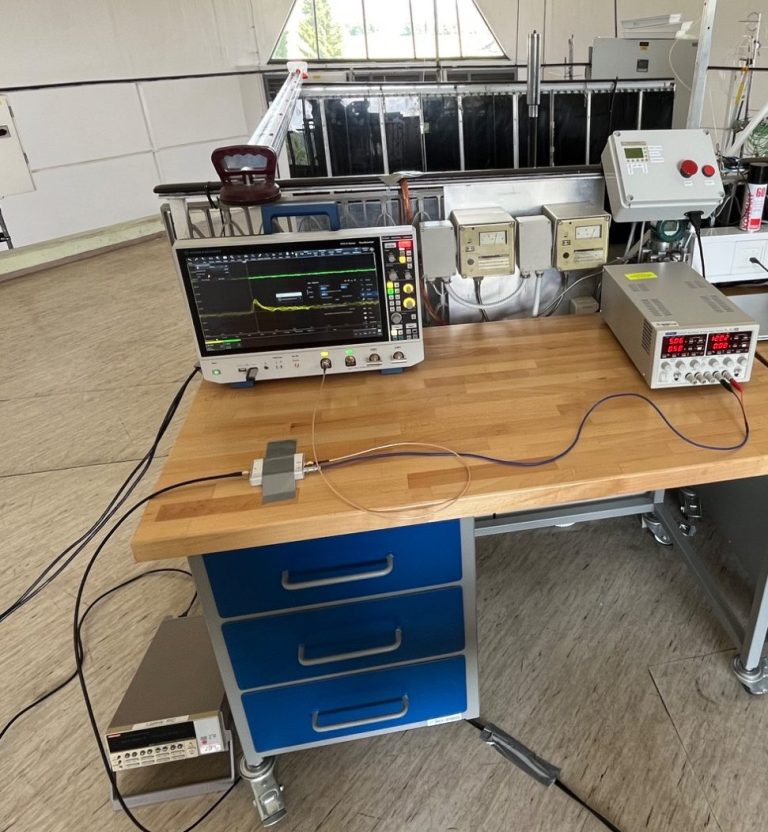
His work focuses on developing robust, high-performance neutron detection instrumentation, leveraging advanced digital signal processing to deliver precise, reliable, and high-integrity data across applications including nuclear safeguards, reactor monitoring, environmental monitoring, spectroscopy, and imaging.
Research and Innovation
Beyond his extensive experience in cosmic-ray neutron monitoring and the development of associated data acquisition and processing pipeline, Dr Aspinall’s research has focused on advanced digital processing techniques for radiation metrology.
During his PhD, he pioneered a novel digital pulse-shape discrimination (PSD) method for real-time analysis of mixed radiation fields.
He subsequently translated this work into industry, leading the development and commercialisation of technologies that have contributed to world-leading advances in:
- Nuclear materials assay
- Nuclear safeguards and non-proliferation
- Radiation imaging
- Time-of-flight spectroscopy
- Fast-neutron multiplicity measurement
Collaborations
Dr Aspinall has collaborated with or supplied solutions to leading organisations across academia, government, and industry. Some of these include:
- The Met Office
- The UK Atomic Energy Authority (UKAEA)
- Mirion Technologies (Canberra UK) Ltd.
- UK Centre for Ecology & Hydrology
- Cosmic-ray soil moisture monitoring network
(COSMOS-UK) - The Neutron Monitor Database and community
- Universities worldwide:
- University of Rome Tor Vergata
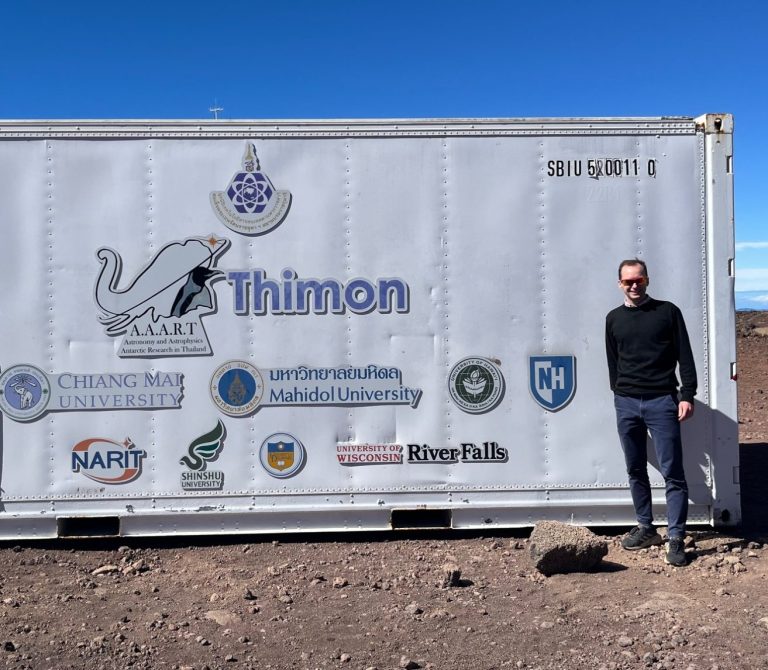
- University of Hawaii
- University of Surrey
Publications
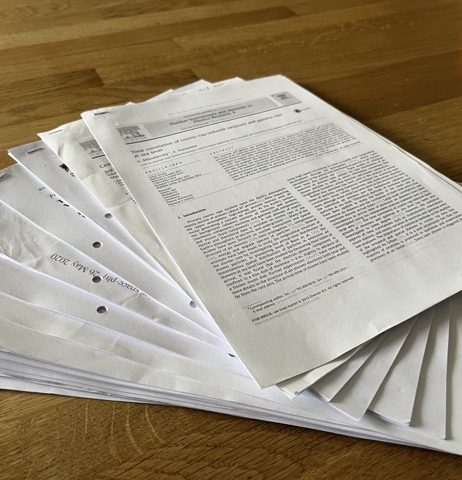
Recent cosmic ray neutron monitoring publications:
A new ground-level neutron monitor for space weather assessment
Boron-coated straw detector efficiency comparison with 3He proportional counters — A prospect for cosmic ray neutron monitoring
Use of a commercial neutron counting module to validate neutron-particle transport code simulation of a new cosmic radiation neutron monitor design
Observation of Forbush decreases and GLE-74 recorded during ground-level neutron monitoring survey from various sites
Click here for Dr Aspinall's full publication list.
Click here for funded research projects led by Dr Aspinall.
In the News
1st July 2025
Mirion Technologies LinkedIn post
27th June 2025
ISIS@MACH ITALIA LinkedIn post
14th Feb 2025
Engineering and Technology online news article titled "First space weather monitor in the UK for 40 years installed in Cornwall"
The Parliamentary and Scientific Committee online news article titled "UK’s First Space Weather Neutron Monitor in 40 Years Installed in Cornwall"
The Engineer online news article titled "New UK space weather monitor enhances solar storm protection"
12th Feb 2025
Innovation News Network online article
11th Feb 2025
Met Office online news article titled "Advancing the monitoring of space weather events"
20 July 2022
YouTube video, "How dangerous is ‘space weather’? | The Royal Society"

Acknowledgements
Previous work were in part carried out at Lancaster University with funding from the Science and Technology Facilities Council (STFC). Aspinall Instruments operates independently and is not affiliated with these organisations.
We acknowledge the support of the UK Met Office in specifying their requirements and facilitating site visits.
We acknowledge the support and collaboration of Mirion Technologies (Canberra UK) Ltd. with repeated loan of test platforms, training, access to their facilities, and professionalism in their contribution to the design and manufacture of the NM-2023.
We acknowledge the support of Chris Frost, Maria Kastriotou and Carlo Cazzaniga at the ChipIr Facility, STFC ISIS Neutron and Muon Source.
We also acknowledge the knowledge shared by the community of stakeholders and custodians of established neutron monitors in the global network: Ilya Usoskin and Alexander Mishev at the University of Oulu, Finland; Danislav Sapundjiev at the Royal Meteorological Institute, Belgium; Monica Laurenza at the National Institute of Astrophysics, Italy, and the PI of the SVIRCO Observatory, the Rome neutron monitor; Roberto Senesi, Carla Andreani and Giovanni Romanelli at the University of Rome Tor Vergata, Italy; Veronica Bindi at the University of Hawaii, USA; Roelf Du Toit Strauss at North-West University, South Africa; Athanasios Papaioannou at the National Observatory of Athens, Greece; John Clem at the University of Delaware, USA; Paul Goldhagen at the National Urban Security Technology Laboratory (NUSTL), U.S. Department of Homeland Security; Keith Ryden et al. at the University of Surrey, UK; and many others.