
Built for Science. Trusted in Operation.
We exist to transform cosmic ray observations into precise, trusted, operational monitoring systems that enables better understanding and response to extreme space weather.
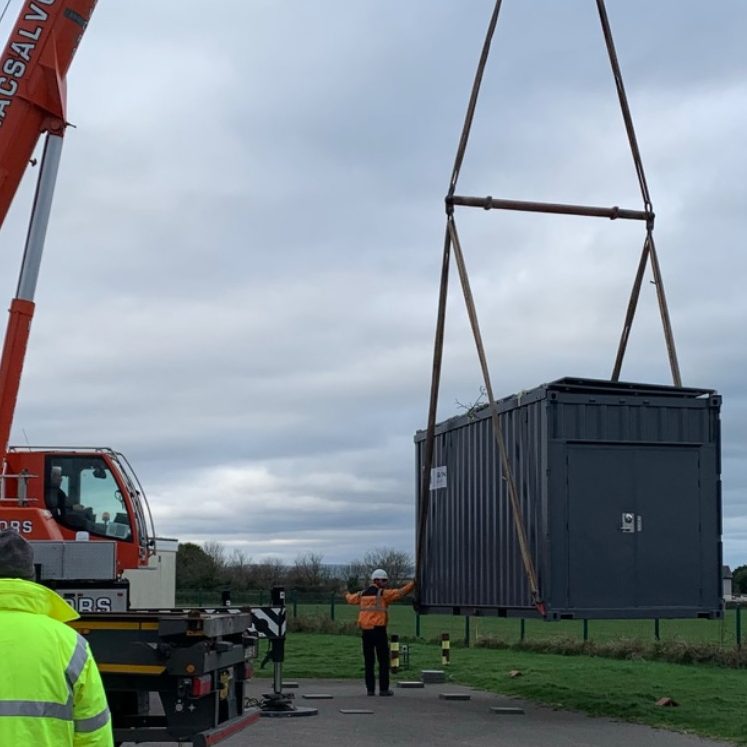
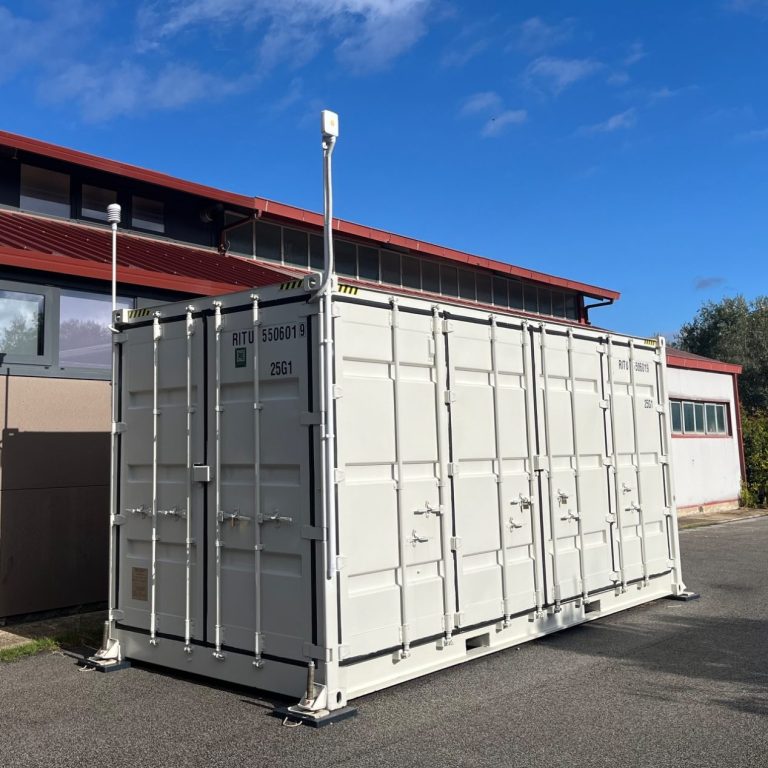
Our flagship achievement is the NM-2023 ground-level cosmic ray neutron monitor, developed and implemented while at Lancaster University and funded by the Science and Technology Facilities Council (STFC, grants ST/W001810/1 and ST/X002241/1). Commissioned and deployed in December 2024 for the UK Met Office, the NM-2023 re-established cosmic ray monitoring in the UK after a 40-year absence.
We deliver across the entire system lifecycle—from requirements capture and modelling, through prototype development and validation, to operational deployment, data processing and long-term support.
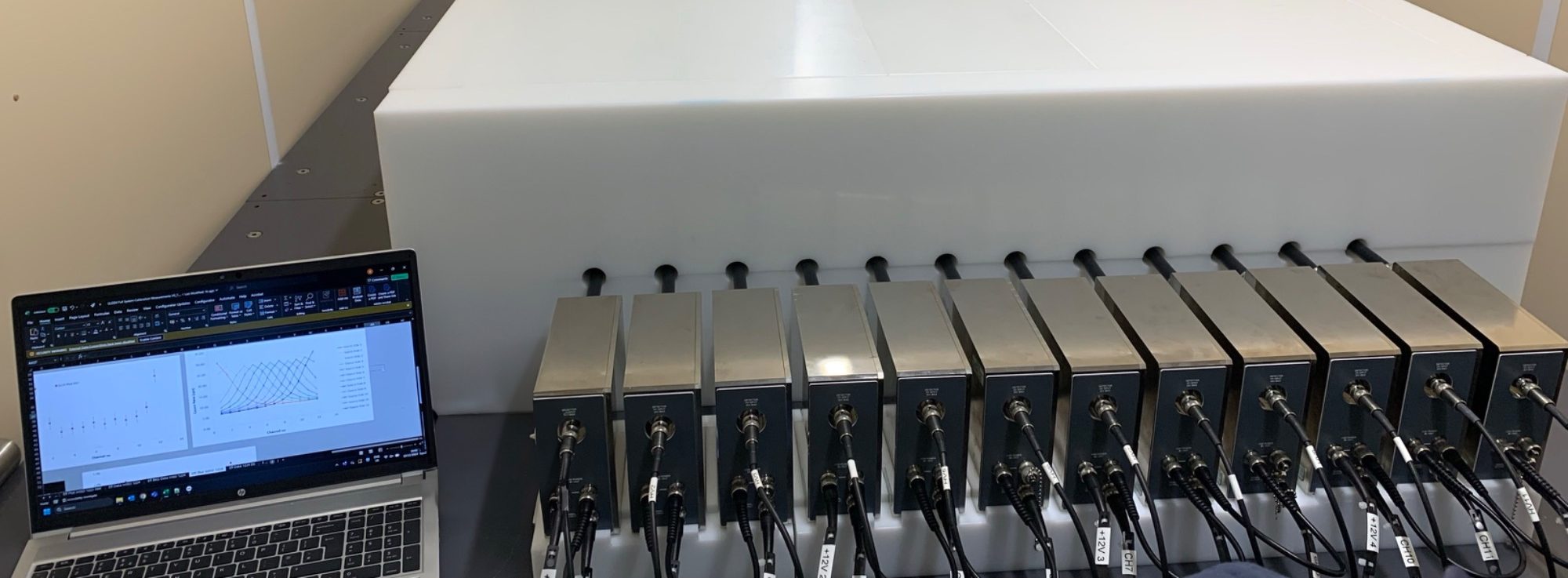
Our Core Offerings
We combine physics, engineering and software into coherent, high-reliability systems.
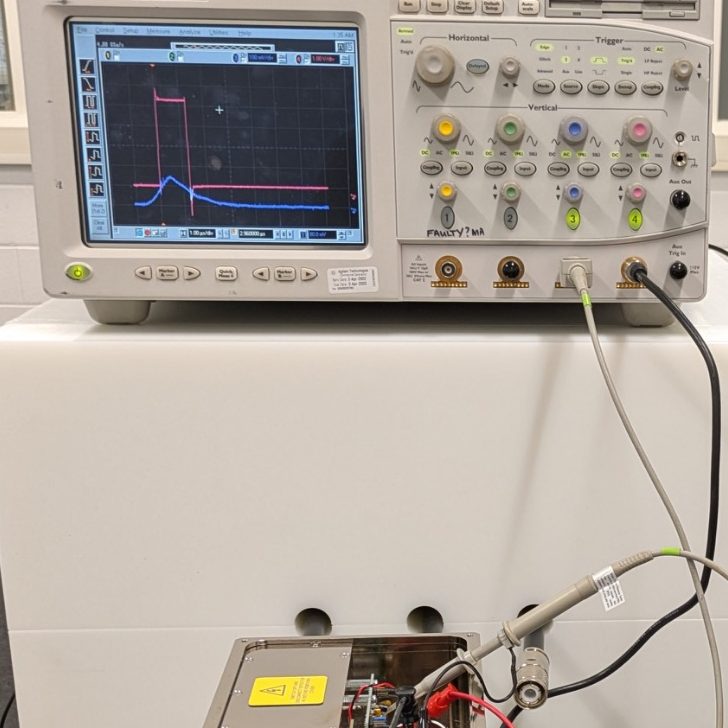
Instrumentation Innovation
The NM-2023 detector selection was driven by a structured comparison and evaluation programme, benchmarking the most viable modern neutron detection technology against those used in existing NM-64 stations, as well as helium-3 gas-filled detectors—the industry standard for thermal neutron counting due to their high detection efficiency, excellent gamma rejection, and proven long-term reliability.
Using a parameterised radiation transport model to systematically refine the design, the NM-2023 geometry was optimised to maximise counting efficiency while minimising the required mass of lead producer. This resulted in a compact neutron monitor design with comparable counting performance of a 6-NM-64, yet with a 64% smaller footprint, 80% smaller volume, and 55% of the mass.
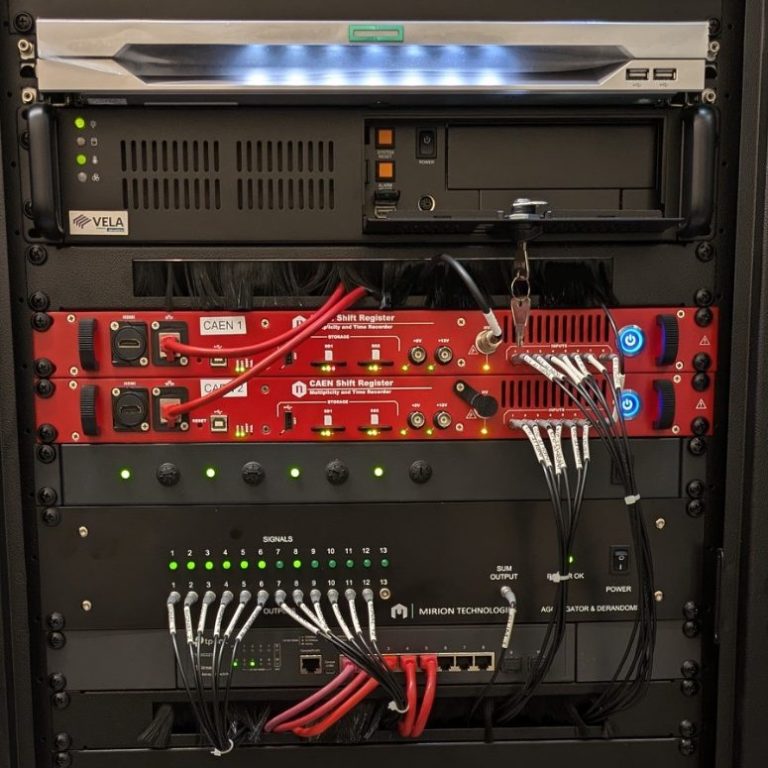
Scientific Software Engineering
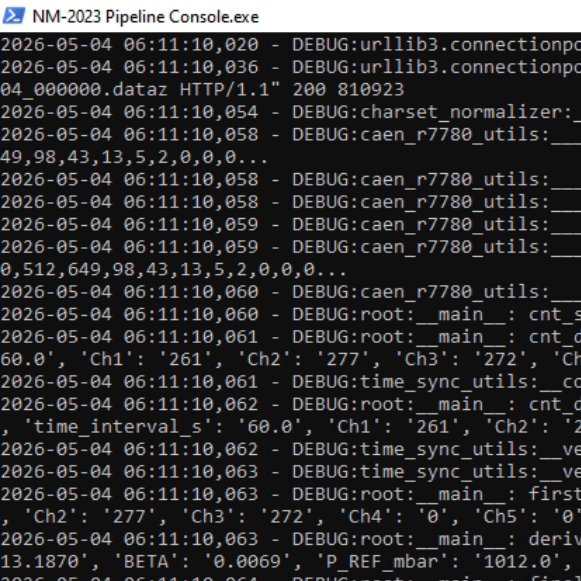
We developed the data pipeline codebase to operate the NM-2023. The codebase manages:
- Automated 1-minute acquisition cycles
- Hardware synchronisation
- Integration of meteorological data
- Error detection and fault-tolerant retry logic
- Atmospheric pressure correction
- Data compatibility with the Neutron Monitor Database
- Email alerting and anomaly detection
- Station configuration for ease and maintainability
The system is engineered for 24/7 operational resilience, adhering to modern coding standards, and designed for long-term institutional ownership.
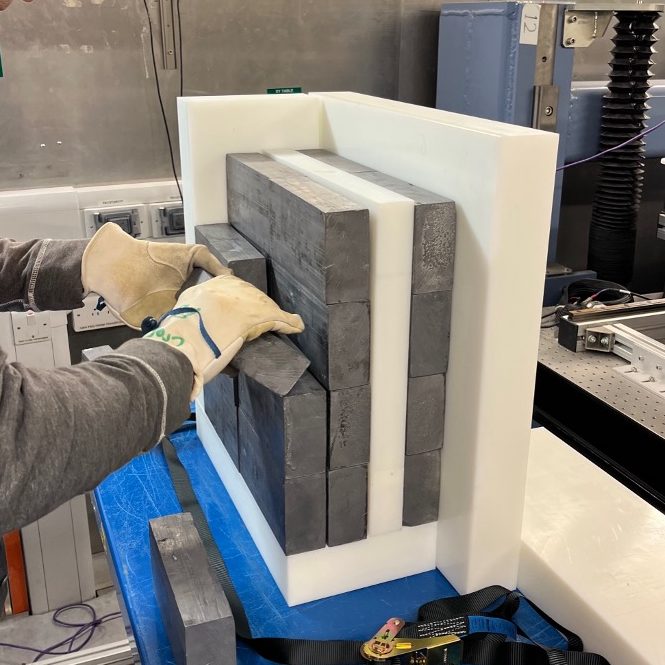
Performance & Validation
Robust validation is central to our approach. The NM-2023 design underwent:
- Monte Carlo radiation transport modelling
- Beamline validation at STFC ChipIr facility
- Multi-site deployment campaigns across the UK (Lerwick, Lancaster, Warrington, Surrey, Cornwall)
- Intercomparison with established international neutron monitor stations
- Successful detection of Ground Level Enhancements
The NM-2023 is now operational at three sites across UK & Europe, providing data for researchers and meteorological services.
Ongoing Support
Long-term performance via structured support. We provide:
- Fault diagnosis & root cause analysis across hardware, software, & data products
- Responsive handling of customer queries with clear technical guidance
- Config management, controlled updates & revisions
- Monitoring of system health, data, & operational status
- Proactive identification of anomalies, & corrective action
- Documentation updates to support system continuity
We want the NM-2023 to remain reliable, maintainable, & scientifically robust throughout its operational lifetime, giving customers confidence in the instrument & the data it delivers.
Space Weather
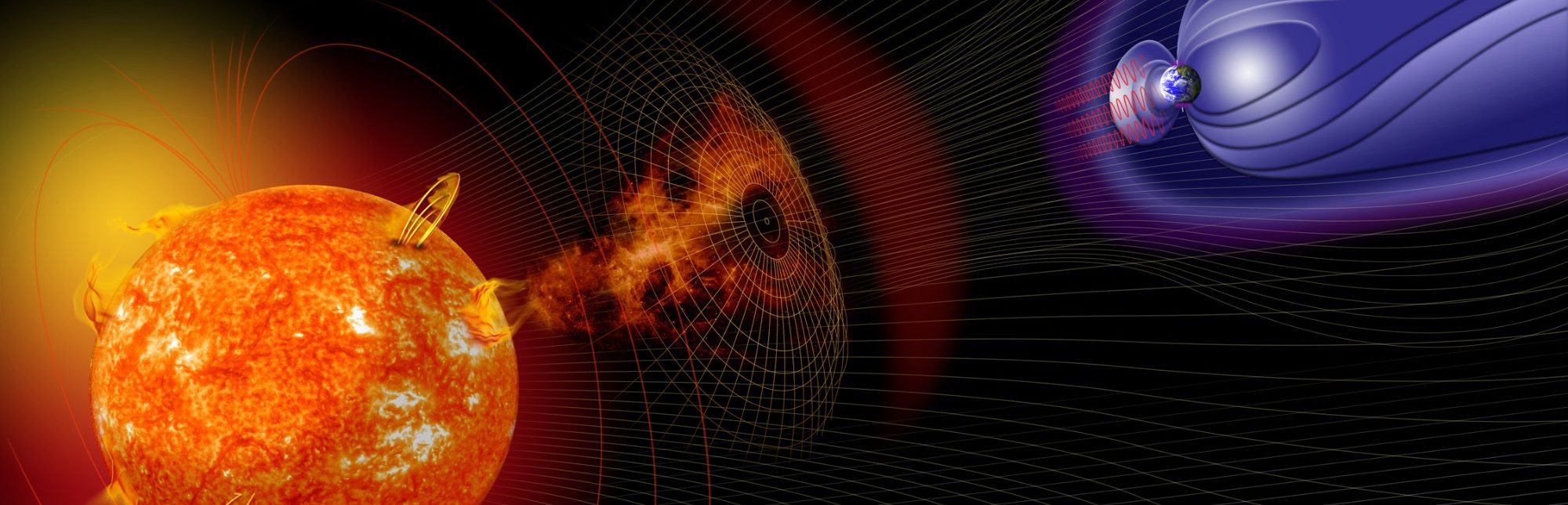
Space weather refers to changes in the environment around Earth caused by activity from the Sun, such as solar flares, coronal mass ejections, and variations in the solar wind. These events can affect the flow of charged particles and radiation in space, with the most extreme events producing cascades of secondary radiation that can be detected at ground level.
In short, space weather is the dynamic radiation and particle environment driven by the Sun, and it matters because it can disrupt technology and operations both in space and on the ground.
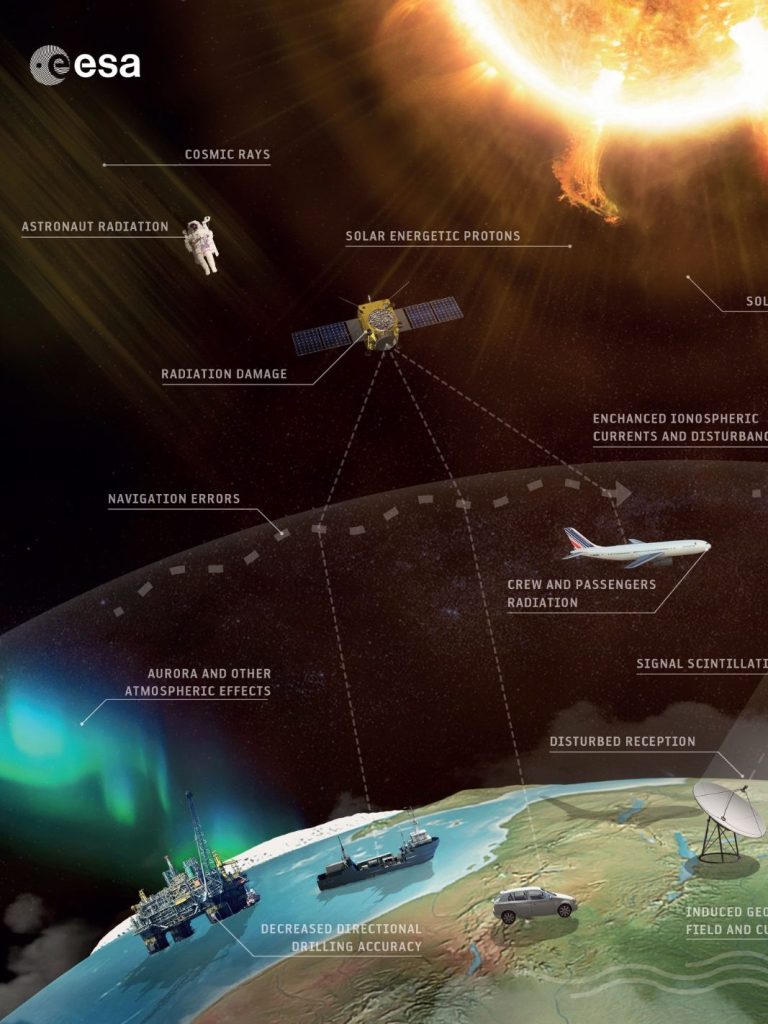
Severe space weather is therefore included on the UK National Risk Register because it can simultaneously imapct satellites and spacecraft, communication and navigation systems (e.g. GPS), power grids on Earth, and increase radiation exposure at high altitudes—posing a systemic risk to modern, technology-dependent society.
Space Weather Monitoring for Critical Global Infrastructure Resilience
The NM-2023 cosmic ray neutron monitor feeds into the UK’s space weather monitoring capability and supports modelling relevant to:
- Aviation radiation exposure
- Satellite operations
- Communications systems
- Power grids
The NM-2023 provides an end-to-end observational and data processing capability, supporting the UK across all phases of severe space weather management.
From early detection to long-term analysis, it plays a vital role in safeguarding critical infrastructure and advancing scientific understanding.
The NM-2023 is potentially a mission-critical system, where failure carries significant technical, financial, safety, and potentially national consequences. It is designed for continuous, reliable operation—24/7, year-round—over decades, with data integrity maintained to the highest standards to support regulatory, safety, and infrastructure needs.
Supporting the UK’s Space Weather Preparedness Strategy
The UK Government’s Severe Space Weather Preparedness Strategy aims to increase our preparedness and resilience to a severe space weather event and is built around three pillars: Assess, Prepare, and Respond & Recover.
The NM-2023 directly contributes to each of these pillars, providing critical national capability in space weather monitoring and data delivery.
Assess
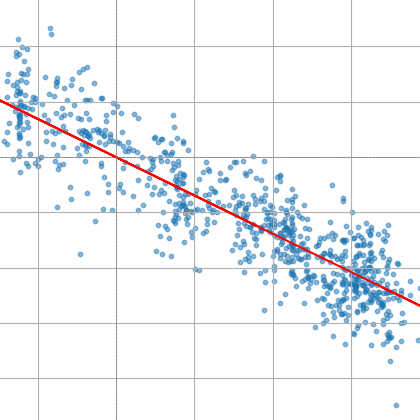
We assess by understanding space weather risks through reliable observations. The NM-2023 delivers continuous, high-quality measurements of cosmic radiation, enabling the detection of high-energy solar particle events that can impact aviation, satellites, and ground-based systems. Our system:
- Provides real-time monitoring of cosmic ray intensity
- Detects ground level enhancements
- Formats data ready for publishing to the Neutron Monitor Database
- Provides high data integrity through automated correction & validation
Prepared
We are prepared by building resilient national capability. The NM-2023 represents a step-change in UK-based monitoring capability, reducing reliance on international infrastructure while improving readiness. Key features include:
- A fully operational UK-based neutron monitor
- An automated data acquisition and processing system
- Robust, fault-tolerant software designed for continuous operation
- Primed for operational deployment into the Met Office Space Weather Operations Centre
Respond & Recover
We support respond & recover by enabling rapid decision-making, learning from events, and strengthening resilience. During severe space weather, the NM-2023 provides:
- Near real-time data on high-energy particle activity at ground level
- Data to the models used to determine aviation radiation levels
- Automated alerts of abnormalities
- Data in operationally ready formats
Post-event, it contributes by providing:
- High-integrity data archives to support analysis & model validation
- Accurate reconstruction of event timing and magnitude